


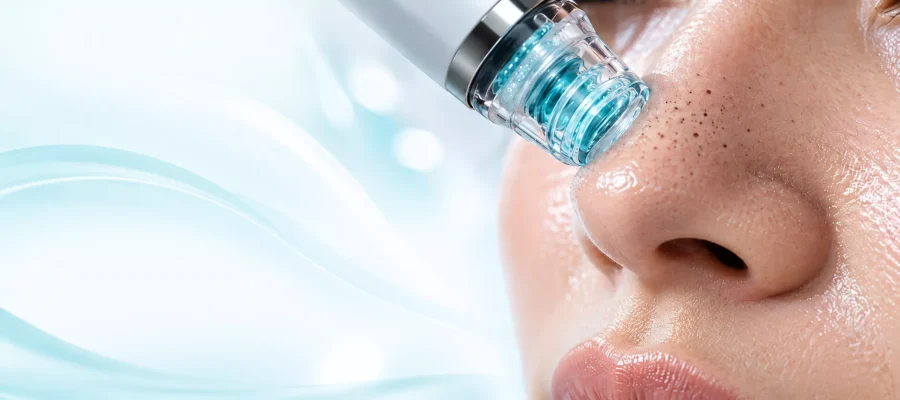
Hydrafacial for blackheads is a skincare treatment that can help remove accumulated oil and dead skin cells from the pores. It may temporarily improve the appearance of superficial congestion, particularly around the nose, chin, and forehead. However, expecting every blackhead to disappear after a single session or never return is unrealistic. Blackheads do not develop simply because the skin is not cleaned thoroughly enough; oil production and skin cell turnover also play a role. How noticeable the results will be depends on the individual’s skin characteristics and the treatment protocol used. For people who have tried countless products without seeing improvements, understanding the limitations of the treatment is the first step toward setting realistic expectations.
What Causes Blackheads?
A blackhead is known in dermatology as an open comedone. Sebum and dead skin cells accumulate at the opening of a hair follicle. When the plug remains exposed to the surface, its contents darken through contact with air. Contrary to popular belief, the dark appearance is not caused by dirt. This is why washing the face more aggressively, scrubbing, or exfoliating frequently may not solve the problem. In fact, these habits can irritate the skin barrier.
It is not surprising that blackheads tend to be more noticeable on oily and combination skin. However, they can also develop on dry skin due to unsuitable products or cosmetics that clog the pores. Genetic predisposition, hormonal fluctuations, and skincare products can also influence their formation. An effective approach should aim not only to remove visible plugs but also to reduce the development of new ones.
How Does Hydrafacial Remove Blackheads?
Hydrafacial treatment combines skin cleansing, controlled exfoliation, vacuum-assisted extraction, and the application of hydrating solutions. As the specialized tip moves across the skin, it helps loosen accumulated debris on the surface. The vacuum action can support the removal of plugs that are relatively easy to extract. However, deeper or more firmly embedded comedones may not respond in the same way.
| Treatment stage | Purpose for blackheads |
|---|---|
| Cleansing | To reduce surface oil and product residue |
| Gentle exfoliation | To loosen accumulated dead skin cells |
| Controlled suction | To remove suitable superficial plugs |
| Hydration | To support skin comfort after the procedure |
Does Hydrafacial Really Help with Blackheads?
Yes, Hydrafacial can reduce the appearance of blackheads in some individuals. The important distinction is that removing material from clogged pores is not the same as eliminating the skin’s tendency to develop blackheads. Since the skin continues producing sebum, cleaned pores may gradually become congested again. Large, well-controlled comparative studies examining the long-term effects of Hydrafacial specifically on comedones are still limited.
A small study involving 20 participants with mild to moderate acne reported an improvement in overall acne appearance following a six-session Hydrafacial protocol. However, because the study did not include a control group, its findings cannot establish a definite success rate for blackhead removal alone. It is more appropriate to consider Hydrafacial a complementary option alongside dermatological treatment when necessary.
Are All Dark Spots on the Nose Actually Blackheads?
Tiny grayish or yellowish dots arranged evenly across the nose are sometimes sebaceous filaments rather than blackheads. These are normal structures that help transport sebum through the follicles to the skin’s surface. Although they may become less visible temporarily after cleansing, they can reappear. Trying to eliminate sebaceous filaments completely may cause unnecessary irritation.
| Feature | Blackhead | Sebaceous filament |
|---|---|---|
| Appearance | Darker, more distinct plug | Small dots of similar size |
| Distribution | Individually or in clusters | Evenly distributed, especially on the nose |
| Structure | Open comedone | Part of the normal follicular structure |
| Skincare goal | To reduce congestion | To keep their appearance under control |
What Should You Expect After Your First Hydrafacial Session?
After the procedure, the skin may feel cleaner, more hydrated, and smoother. When noticeable oil buildup around the nose is reduced, pores may also appear less prominent. Nevertheless, the results are not identical for everyone. People with numerous closed comedones, inflammatory pimples, or significant skin sensitivity may require a different approach. Mild redness or temporary sensitivity can also occur immediately after treatment.
Sometimes, the quick improvement seen in the mirror has more to do with smoother skin texture and increased hydration than the complete removal of blackheads. Understanding this distinction helps prevent disappointment when oiliness returns a few days later. The results should not be judged solely by how radiant the skin looks immediately after the appointment. Observing the skin over the following weeks can provide a better indication of how the treatment fits into a regular skincare routine.
Does Hydrafacial Minimize Pores?
Pore size is influenced by genetics, oil production, age, and skin elasticity. When accumulated material is removed from the pores, they may begin to look smaller. However, it would be inaccurate to claim that Hydrafacial permanently reduces their anatomical size. The visible improvement is mainly associated with reduced congestion and a smoother skin surface. Lighting, camera distance, and makeup can also affect how prominent pores appear in photographs. This is why before-and-after comparisons should be made under similar conditions.
For individuals concerned about enlarged pores, blackheads may not be the only contributing factor. Oiliness, sun damage, and the skin’s structural characteristics should also be considered. In these situations, the skincare approach can be adjusted according to the individual’s expectations.
Which Skin Types May Benefit Most from Hydrafacial?
Because accumulated sebum makes blackheads more noticeable on oily and combination skin, these skin types may experience more visible cosmetic benefits from cleansing treatments. Hydrafacial may also be preferred for dull skin with an uneven texture but without significant active inflammation. For dry skin, maintaining adequate hydration may be more important than the strength of the suction or the exfoliating products used.
A standard Hydrafacial procedure may not always be suitable for sensitive skin, skin prone to rosacea, or individuals with a compromised skin barrier. If active eczema, open wounds, or significant irritation are present, the procedure may need to be postponed. A dermatological examination is important for determining which areas should be treated and how intensive the application should be.
Hydrafacial or Other Blackhead Treatments?
Hydrafacial is primarily a supportive procedure focused on cleansing and improving skin comfort. For constantly recurring comedones, however, regular treatments targeting pore congestion may be necessary. Salicylic acid and appropriate retinoids, for example, are among the options used in dermatology for comedonal acne. When noticeable inflammatory pimples are also present, a separate acne treatment plan may be required.
| Method | Main purpose | Important considerations |
|---|---|---|
| Hydrafacial | To reduce superficial congestion and dullness | Its effects may be temporary |
| Salicylic acid | To help reduce buildup inside the pores | Excessive use may cause irritation |
| Topical retinoids | To reduce the formation of new comedones | Medical guidance and correct application are important |
| Professional comedone extraction | To remove suitable plugs in a controlled manner | Professional assessment is safer than squeezing them at home |
Why Do Blackheads Return After Hydrafacial?
The reason is that the skin continues producing sebum and new skin cells even after a skincare treatment. When oil production is high, particularly on the forehead, nose, and chin, it is natural for pores to become congested again. Hydrafacial does not permanently stop this biological process. Some of the dots that reappear shortly after treatment may actually be sebaceous filaments. Rather than repeatedly undergoing vacuum extraction, it is important to identify these structures correctly.
If inflammatory pimples accompany blackheads, periodic cleansing alone may not be sufficient. In such cases, pimple treatment and an appropriate home skincare routine should be evaluated together. The choice of treatment depends on the number of comedones, medications being used, and the skin’s tendency to become irritated.
How Often Should You Have Hydrafacial?
The interval between treatments is not the same for everyone. Although skincare clinics commonly recommend sessions every three to four weeks, there is no strong evidence that everyone with blackheads needs monthly Hydrafacial treatments. The frequency can be determined by monitoring the skin’s response after the first procedure, its sensitivity, and the products used at home.
Someone with only a few superficial comedones will have different treatment needs from a person with widespread acne. Furthermore, if strong exfoliating acids or retinoids are being used, the timing of the procedure should be assessed separately. The goal is not to receive treatments as frequently as possible, but to achieve sustainable results without placing unnecessary stress on the skin.
What Can You Do at Home to Prevent Blackheads from Returning?
Using a gentle cleanser, a moisturizer suited to your skin type, and sunscreen during the day provides a good starting point. There is a common misconception that oily skin does not need moisturizer, even though excessive drying can lead to irritation. Instead of heavy products that may clog pores, suitable non-comedogenic options can be preferred. When introducing a new active ingredient, starting several products at the same time can make it difficult to identify what may be causing irritation.
Skincare products containing salicylic acid or retinoids can be helpful for controlling blackheads, but not every product is tolerated equally by every skin type. Special circumstances, such as pregnancy, must also be considered when using retinoids. If persistent comedones are accompanied by acne and pigmentation concerns, the suitability of different approaches, such as Acnelan treatment, can be discussed with a dermatologist.
Why Is a Dermatological Assessment Important Before Hydrafacial?
Two people with seemingly similar skin may have different underlying causes of blackheads and accompanying concerns. One person may simply have sebaceous filaments on the nose, while another may have widespread comedonal acne. Without making this distinction, someone may repeatedly undergo procedures they do not actually need. In Specialist Dr. Şeyma Demirci’s assessment, planning treatment according to the skin’s individual needs is also more meaningful than following a one-size-fits-all skincare approach.
When the skin’s current condition, ongoing treatments, and daily habits are considered together, it becomes easier to determine whether Hydrafacial is truly necessary. Sometimes, an appropriate home skincare routine is sufficient, while professional cleansing may provide additional support in other cases. A good result is measured not only by how the skin looks immediately after the procedure but also by how it behaves over the following weeks.
Frequently Asked Questions
Does Hydrafacial Completely Eliminate Blackheads?
- It may help remove some superficial blackheads.
- Deep or stubborn comedones may not all be removed in a single treatment.
- New blackheads may form because oil production continues.
What Should You Avoid After Hydrafacial?
- Avoid rubbing or squeezing the skin aggressively during the first day.
- Consult the practitioner before using irritating acids or exfoliating products.
- Continue gentle moisturizing and appropriate sun protection.
Does Hydrafacial Remove Blackhead Marks?
Blackheads are not the same as pigmentation or depressed scars that develop after acne. Hydrafacial may temporarily improve the appearance of the skin’s surface, but it should not be considered a treatment for prominent, depressed acne scars. Different dermatological options may be necessary depending on the type of scarring.
Is Hydrafacial or Traditional Facial Cleansing Better for Blackheads?
There is no single option that is best for everyone. Hydrafacial provides skincare through controlled suction and specialized solutions, while other professional methods use different cleansing techniques. Skin sensitivity, the depth of the plugs, and the presence of acne are important factors when choosing a treatment. The most expensive or most frequently repeated procedure is not necessarily the most suitable option.