


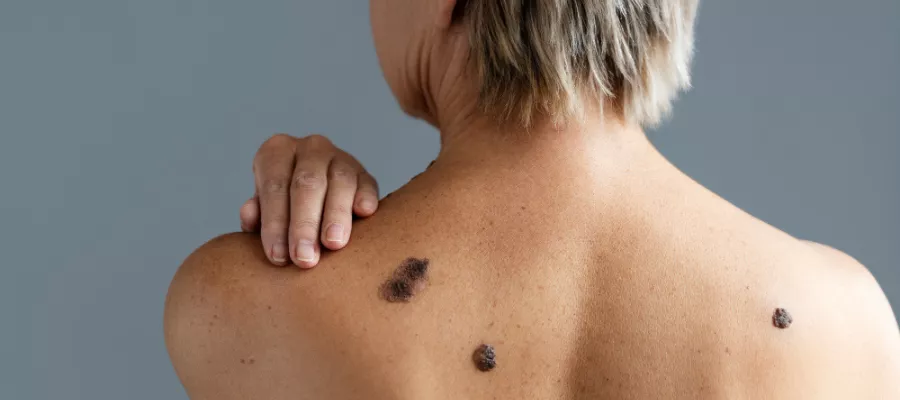
Ota nevus and Ito nevus are blue-gray or brown pigmentation disorders caused by abnormal melanin production by deep dermal melanocytes. They are usually congenital and may darken over time.
✔ Ota Nevus:
• Most commonly appears on the face (around the eyes, cheeks, forehead).
• Pigmentation may also occur in the sclera (white of the eye) and mucosal areas.
• More frequently seen in individuals of Asian descent.
✔ Ito Nevus:
• Develops in areas outside the face such as the shoulder, back, and supraclavicular region.
• Less common than Ota nevus.
These lesions are benign and do not carry a risk of malignancy. However, they may be treated for aesthetic reasons.
This article will examine the causes of Ota and Ito nevi and the most effective dermatological treatment methods based on scientific data.
I. HOW DO OTA AND ITO NEVI FORM?
✔ Migration of Melanocytes into the Dermis:
• Caused by melanocytes (melanin-producing cells) failing to fully settle into the upper skin layer during embryonic development.
✔ Genetic Predisposition:
• Higher risk in individuals with a family history of similar pigmentation disorders.
✔ Ethnic Factors:
• Common in individuals of Asian, African, and Latin American descent.
✔ Hormonal Changes:
• Nevi may darken or become more prominent during pregnancy or puberty.
II. TREATMENT METHODS FOR OTA AND ITO NEVI
Treatment involves laser technologies targeting deep dermal pigment and supportive skin-renewing applications.
1. Medical Aesthetic and Dermatological Applications
a) Q-Switch Nd:YAG Laser for Ota and Ito Nevus Treatment
✔ Q-Switch laser selectively targets and breaks down melanin pigment to lighten the skin.
✔ One of the most effective treatments for deep dermal pigmentation like Ota nevus.
✔ The number of sessions varies based on lesion depth, typically ranging from 4 to 8 sessions.
c) Fractional Laser for Skin Renewal and Tone Balancing
✔ Promotes skin renewal and reduces the visibility of the lesion.
✔ More effective when combined with Q-Switch or Picosecond lasers.
d) Exosome Therapy for Skin Renewal and Post-Laser Support
✔ Accelerates skin healing after laser treatment, reducing redness and sensitivity.
✔ Strengthens the skin barrier and helps even out skin tone.
✔ May reduce the risk of hyperpigmentation, especially in darker skin types.
2. Persistence and Recurrence of Ota and Ito Nevi
✔ These nevi are congenital and do not disappear on their own.
✔ Laser treatment can significantly lighten the lesions and provide long-term results.
✔ Multiple sessions are typically needed for complete clearance.
✔ Post-laser sun protection is essential, as pigmentation may darken again without it.
III. TIPS TO PREVENT RECURRENCE OF OTA AND ITO NEVI
✔ High-SPF sunscreen (SPF 50+) must be used after laser treatments.
✔ Antioxidant-rich creams (vitamin C, vitamin E, niacinamide) can strengthen the skin barrier.
✔ Avoid skin-irritating chemicals and harsh peels during the treatment process.
✔ Skin-tone balancing mesotherapy can support laser treatments.
Conclusion: Most Effective Treatments for Ota and Ito Nevi
✔ Q-Switch Nd:YAG laser provides the most effective results by targeting deep dermal pigment.
✔ Fractional laser supports skin renewal and accelerates pigmentation fading.
✔ Exosome therapy speeds up the healing process and is ideal for post-laser care.
✔ Consistent use of sunscreen reduces the risk of post-laser hyperpigmentation.
🔬 It is recommended to consult a dermatologist to determine the most suitable treatment method for your Ota or Ito nevus.